Enquiry Form
How Wearable App Development Services Are Changing Everyday Life
Wearable applications are changing our way of life, work, and communication, whether through fitness trackers, smartwatches, AR glasses, health monitors, or more. The services designed for creating wearable apps allow these devices to become better integrated and improve our everyday experiences.
We will explore how wearable applications are transforming daily life and why they are becoming increasingly essential.
The Rise of Wearables in Daily Life
The wearable is everywhere, on the wrists, fingers, ears, and clothes. Wearables are powerful not only because of their hardware but also due to the applications that transform data, intelligence, and interaction for these devices.
The following are some of the trends that are driving this change:
- Smooth health tracking: checking heartbeat, sleep, and oxygen levels.
- Convenience Everywhere: access to alerts, messages, and calls fast.
- Context-aware computing: applications that adjust to your location or activity.
- IoT integration: smart homes, cars, and environments talking to wearables.
Wearable app development services now focus on bridging sensors, connectivity, UI design, and backend intelligence to deliver real value. According to industry guides, building a wearable app involves special attention to power management, minimal UI, and sensor fusion.
Everyday Impacts of Wearable App Services
Here are concrete ways wearable apps are changing lives:
1. Health & Wellness Monitoring
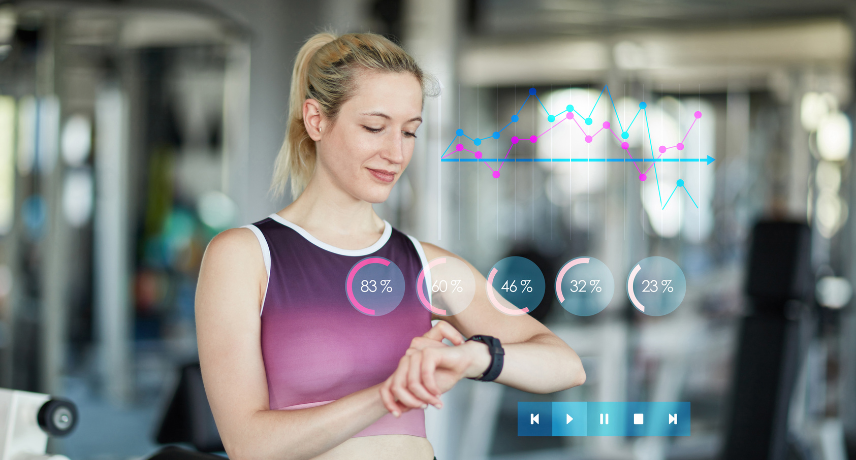
Smart wearables monitor heart rate, physical activity, stress levels, and sleep patterns, among other metrics. Users can utilize this real-time data to make informed decisions, allowing them to adjust workouts, take breaks, or correct their posture.
2. Smarter Notifications & Communication
Wearables can show you messages, reply through voice, or get contextual feedback instead of taking out your phone. You stay connected without interrupting your flow.
3. Navigation & Location Services
Do you have directions? A wearable map, wayfinding, and location-aware services make commuting, walking, or exploring a hands-free experience.
4. Productivity & Reminders
Wearable devices also have the capability to notify you of meetings, calls, or work when your hands are occupied or your phone is not functioning.
5. Personalized Experiences
Whether you are at work or studying, the app can transform itself to suit your activities. You can exercise with it, you can set it when you are taking a rest, and you can receive a notification when something significant occurs.
6. Contactless Payments & Access
Using NFC wearables, one can tap and pay, tap to open, or tap to authenticate a door without a wallet or physical key.
7. Fitness Coaching & Real-Time Guidance
You can use wearable applications as your personal trainer to you- they can guide you through exercises, give reminders, and even give feedback throughout the exercise.
8. Safety & Alerts
Wearable alerts (in case of falls or health anomalies) can be sent, location may be shared, or SOS capabilities may be engaged with a minimum of user intervention, especially in case of emergencies.
What Makes a Great Wearable App: Key Features
To really make an impact, wearable app development services should provide the following:
- Access to correct data and sensor integration (accelerometer, heart rate, GPS).
- Low power consumption to prolong battery life
- Minimal, glanceable UI actions should take seconds, not minutes
- Cross-device sync working seamlessly with smartphone counterparts
- Offline capabilities & local processing when connectivity falters
- Strong data security & privacy (especially health data)
- Context awareness apps that “understand” your state or location
- Scalable architecture to support updates and new features
These design considerations separate wearable apps that simply exist from those that enrich everyday life.
Challenges & Considerations
While the promise is huge, there are real challenges:
- Battery constraints: processing must be lightweight
- User interface limitations: small screens demand clever design
- Data privacy risks: health and location data are sensitive
- Hardware fragmentation: many wearable platforms and standards
- Connectivity issues: ensuring smooth sync and fallback modes
But as wearable app services mature, many of these barriers are being addressed by smarter algorithms, edge processing, and robust app architectures.
Future Directions to Watch
The evolution doesn’t stop. Here’s where wearable apps may head next:
- AR glasses (wearing glasses) and smart assistants.
- AI/inference on-device in order to minimize latency and enhance privacy.
- Smooth transition among wearable, smartphone, and home appliances.
- Predictive insights—anticipating user needs before they act
- Advanced health diagnostics—wearables becoming medical-grade
The next decade will likely see wearables deeply woven into our environments—and the apps powering them will define how we experience that world.
Conclusion:
The wearable applications are transforming our technology usage. They transform the devices that are idle into health, work, safety, and convenience partners. They enhance ordinary life with sensors, AI, knowledge of your environment, and simple design.
Softwares In Demand can assist you in finding an appropriate development partner in case you need to develop or market wearable applications. Softwares In Demand is a specialized platform that links IT/software companies with clients seeking products or services. They produce quality leads and make meaningful contacts in the technology world. In case of assistance in developing or promoting wearable apps, visit Wearable App Development Service on their site: https://softwaresindemand.com/mobile-app-development/wearable-app-development-service.
FAQ:
1. What is a wearable app?
Wearable application A wearable application is a software application created to be used on wearable devices such as smartwatches, fitness watches, AR glasses, or health watches. It uses sensors and context to deliver glimpsed and personalized experiences.
2. How long does it take to develop a wearable app?
It depends on complexity. A basic fitness or notification app may take 2–4 months, while AR-integrated or health-diagnostic wearables can take 6+ months.
3. Are wearable apps expensive?
They can be—sensor integration, UI design, security, and optimization all add effort. But many features scale modularly, letting you start with an MVP and expand.
4. Which platforms support wearable apps?
Such ordinary systems are Wear OS (Android), watchOS (Apple), Tizen, Fitbit OS, and new AR/VR systems.
5. Do small companies benefit from wearable apps?
Definitely. The simplest wearables (e.g., step trackers, reminders) are also able to assist niche brands to create unique value, distinguish themselves, and engage customers further.